
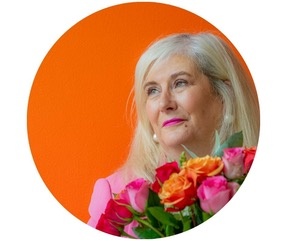
‘Style personality’ is not a new thing. It’s a way of communicating a little about who we are without saying a word. Sadly, whether we like it or not, people will make a judgement of us within the first 7 seconds of meeting or seeing us and at least part of this judgement is based on how we look.
However, there is more to it than that. There is a whole “psychology of clothing” around the clothes we choose to wear and the impact those choices have on us as wearers and on others.
"Enclothed Cognition" is the term used by scientists, Hajo Adam and Adam D Galinsky, to describe how clothing impacts how we THINK! The theory suggests that the clothing we wear has huge influence on our cognition - our ‘thought patterns’ or psychological processes - AND that what we wear can improve our performance on tasks.
For centuries, clothing choices have signalled to others who we are and where we belong in the world. But it is now scientifically proven that what we wear informs our brains what kind of behaviours it need to possess, while wearing that kind of outfit! Wow!
In numerous studies undertaken as part of the research, it was determined that clothing holds symbolic meaning. The influence of the clothes depends on both wearing the clothes and the meaning it evokes in the wearer’s psychological make up. For instance, when selecting to wear a white ‘overall’ coat, the wearer may symbolically consider the item a doctor’s coat and behave in a way that is stereotypical of the doctor. During the research experiments it was demonstrated, that this assigned symbolism actually had measurable effects on psychological states AND performance! A second person may perceive the coat to be an artist’s overall and while wearing the overall will perform as a stereotypical, free-spirited, creative.
As part of the experiment, the scientists gave everyone the same coats, but they told half it was a doctor’s coat and half it was a painter’s smock. Those who thought it was a doctor’s coat could focus harder and longer than those in the painter’s smock. Researchers concluded that this was because doctors are known to be attentive and detail-oriented, so those in the doctors’ coats began to take on similar “doctor” traits. They were actually taking on the expectations of the outfit!
Another study, in the Journal of Experimental Psychology, even found that wearing a suit gave wearers an edge in an argument over someone in casual clothing.
So, it is now proven that wearing “power clothing” makes wearers feel more confident, can improve motivation, productivity, thinking, and negotiation skills. Wearing casual clothes communicates a more friendly, personable, and creative wearer.
What we wear certainly doesn’t define our values as human beings. But there is an important psychology of clothing that means it’s important to understand how our clothes impact our thoughts and actions - and how others perceive those thoughts and actions based on what we’re wearing as well.
It will be interesting to see how the post-pandemic trend towards more casual wear for work will further impact on how we are perceived and how our cognition is impacted. During lockdown I had many discussions about the merits or otherwise of maintaining a ‘professional’ dress code for virtual meetings and presentations. It was certainly a contentious topic of discussion.
So next time you're choosing what to wear ask yourself "How do I want to feel today?" Perhaps 'confident', 'friendly', 'composed', may be among the adjectives. Then ask yourself which items of clothing you have that fulfil that brief. In this way you are intentionally embracing the theory of "enclothed cognition" and should notice the behavioural impact of that clothing choice.
I'd love to know your thoughts.
Do you dress to meet the expectations of others and context; to ensure comfort; to please yourself or to embody the cognitive and performance symbolism of the science?
If you’ve lost your way with your style over lockdown, please get in touch. I’d love to help.
